 |
 |
|
Specifications |
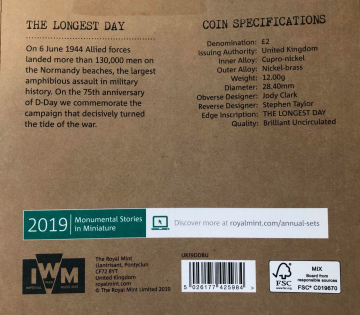
| Issued |
2019 |
| Diameter |
28.4mm |
| Weight |
12g |
| Composition |
Outer: nickel-brass 76%
copper, 4% nickel, 20% zinc |
| Composition |
Inner: Cupro-nickel 75%
copper, 25% nickel |
| Obverse |
Jody
Clark |
| Reverse |
Stephen
Taylor |
| Edge |
Milled |
| Inscription |
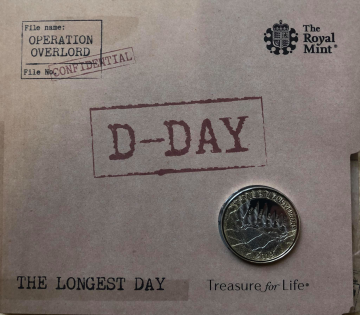
THE LONGEST DAY |
| Mintage
B.U |
99,460 |
| |
| B.U pack |
C |
 |
| £10.00 |
L |
| 07/05/19 |
I |
| UK19DDBU |
C |
|
Sold |
25,935 |
K |
|
|
Design
details:
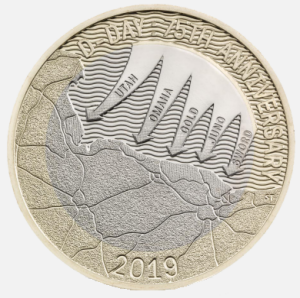
D-Day Landings
Seventy-five years ago, the Allies sought a foothold on mainland Europe in
a bid to turn the tide of the Second World War. To defeat Germany, the
Allies knew they had to open a second front, relieving pressure on the
Soviet Union and weakening Hitler’s grip on mainland Europe. US Army
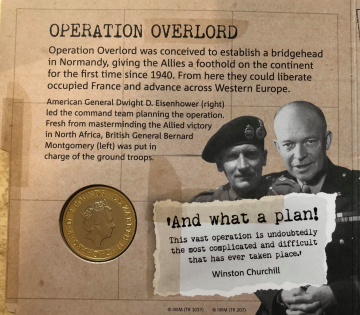
General Dwight D. Eisenhower led the command team planning the operation.
Fresh from masterminding the Allied victory in North Africa, British Army
General Bernard Montgomery was put in charge of the ground troops.
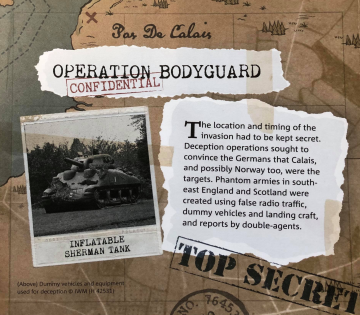
An invasion of this scale was a huge logistical challenge, incorporating
thousands of personnel and millions of tonnes of supplies. Deception
campaigns kept the Germans off guard, unsure where the imminent invasion
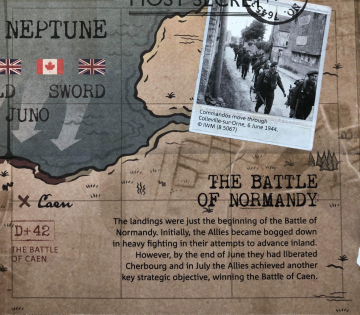
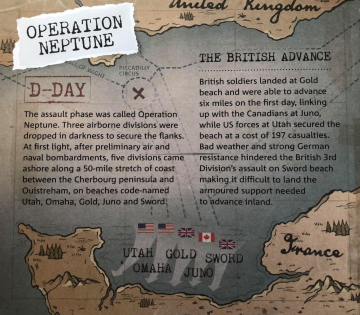
would come. When the day finally came on 6 June 1944, more than 130,000
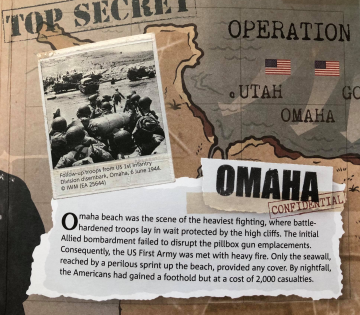
men landed on five Normandy beaches - code-named Utah, Omaha, Gold, Juno
and Sword - aided by around 7,000 ships and landing craft, 12,500 vehicles
and 11,590 aircraft.
|